Home › Guides › Move-in checklist
Moving into a Korean apartment: 10-minute plumbing checklist
On move-in day you will check the wallpaper and count the air-con remotes. Spend ten more minutes on the plumbing — it is the part of the apartment most likely to cost someone money, and the timestamp on your photos decides whose money.
Here is the uncomfortable truth about rental repairs in Korea: when something plumbing-related surfaces in month three, the first question is always "was it like this before you moved in?" — and without evidence, that argument defaults against the person who cannot prove anything. The fix costs nothing but ten minutes and your phone camera, done once, on day one or as close to it as you can manage. Test everything below, film what you find, and send the results to the right person in writing. Future-you will be grateful.
The 10-minute test sequence
- Water pressure, under load. Open the kitchen tap, a bathroom sink tap, and the shower at the same time. Pressure that collapses when two fixtures run points at clogged aerators at best, scaled-up supply lines at worst — common in older villas.
- Hot water: how long, and does it hold? Time how long the shower takes to run hot, then check whether it stays hot for five minutes. Endless lukewarm water or temperature that seesaws is a boiler or mixing-valve conversation you want on record early.
- Every drain, with real volume. Fill each sink to the brim and pull the plug; run the shower hard at the bathroom floor drain for two minutes. Watch the speed and listen — glugging and slow spirals mean build-up already in the line. A drain that is "a little slow" on day one is a blockage by month four, and whose bill that is depends heavily on whether you flagged it now.
- The toilet, three ways. Flush and watch the whole cycle: strong swirl, full evacuation, tank refilling and then going silent. A tank that hisses or trickles forever is leaking water through the flapper — slow, invisible, and it shows up on the water bill you are about to start paying. A weak, lazy flush can hint at venting or partial blockage issues downstream.
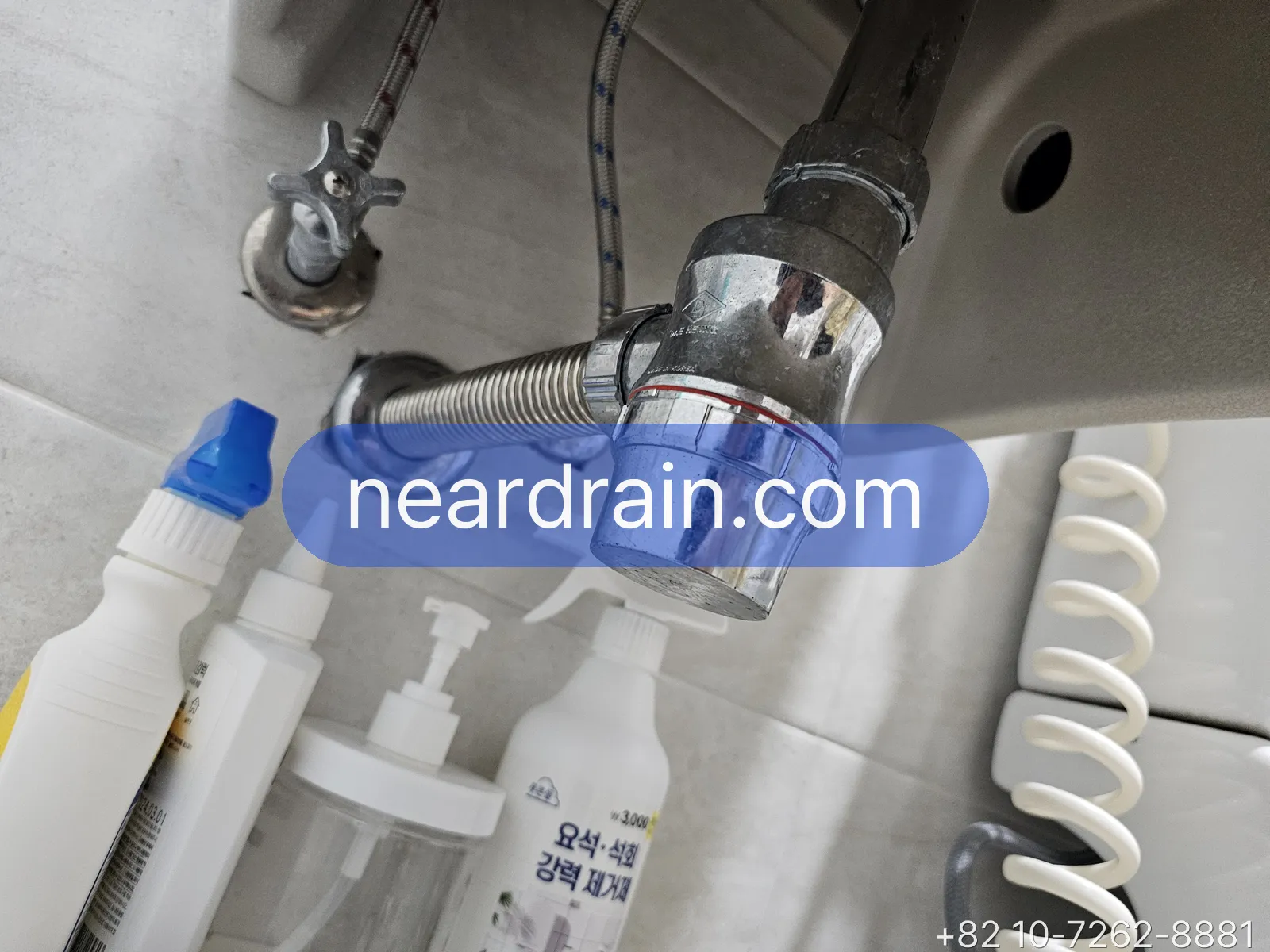
- Under-sink cabinets. Open them, put your hand on the trap joints, run the water a full minute. Look for drips, mineral crust, warped cabinet floors, or a fresh towel someone left wrapped around a pipe — the universal signature of a known leak.
- Washing machine hookup. Check the tap turns and does not weep, and that the drain hose actually sits in a drain fitting rather than resting loosely in an open pipe. (A loose hookup is also a sewer-smell source — details here.)
- Sniff the bathrooms and the veranda. A sewage smell on day one means dried traps or missing trap inserts. Easy to fix, but note it anyway — it tells you how long the unit sat empty and whether drains were maintained.
- The boiler panel. Photograph the model plate and the control panel, note any error code, and check the pressure gauge if it has one (roughly 1–2 bar cold is the normal zone on most wall-hung units). Ask when it was installed — a 15-year-old boiler is living on borrowed time, and that is worth knowing in July rather than discovering in January. While you are at it, find the water meter and main shut-off valve; in an emergency you will not have time to search (why this matters most in winter).
- The hidden-leak test. With every fixture off and the toilet tank full, look at the water meter. If any dial or the small star-wheel is creeping, water is moving somewhere it should not be. This two-minute check catches the leaks that otherwise announce themselves through a shocking bill or a downstairs neighbor — and it is exactly what leak detection exists to chase down.
- Ceilings, walls, and floors. Photograph any stain, bubbled wallpaper, swollen skirting, or tile with hollow-sounding grout — especially bathroom ceilings (open the access hatch and shine your phone light in) and the wall shared with the neighbor's bathroom. These are the fingerprints of past leaks; you want it on record that they predate you.
Turning ten minutes into actual protection
- Film continuously, do not just photograph. One slow walkthrough video of all the tests above carries automatic timestamps and is hard to dispute.
- Send findings the same day, in writing. KakaoTalk to the landlord or the realtor who brokered the lease, or to the management office for building-side items. A message like "Moved in today — flagging these for the record" with photos attached costs you thirty seconds and creates the timestamp that matters. Verbal mentions at the contract signing evaporate; messages do not.
- Ask for repairs now, while leverage exists. The weeks right after signing are when landlords fix things fastest — the relationship is fresh and the realtor is still answering calls. A dripping mixer tap or slow drain reported in week one is a small favor; the same item in month six is a negotiation.
- Keep it all in one place. A folder with the walkthrough video, the messages, and your lease means that any future dispute — deposit deductions included — starts with you holding the file.
If the landlord shrugs it off
Sometimes the reply to your day-one report is a cheerful "oh, it has always done that." Do not argue — just answer in writing: "Understood — noting it for the record so it is not attributed to me later." That single sentence converts a brush-off into an acknowledgment. For anything that genuinely affects daily life (weak hot water, a drain that barely moves), loop in the realtor who brokered the lease; their leverage over the landlord is strongest in the first weeks, and most will nudge a repair along to protect their own reputation. If the problem later grows into a real dispute, the message trail you started on day one is the entire game — see how Korean repair responsibility actually gets decided.
Found something you cannot assess?
Half of what this checklist surfaces needs no plumber at all. For the other half — the creeping meter, the mystery stain, the drain that gurgles — text us the video. We will tell you honestly whether it is a landlord conversation, a cheap part, or a job worth pricing; and if it becomes a job, you get the number before we start, fixed. English by text (SMS) works best. Phone calls are fine in Korean or Japanese.
From our own job sites
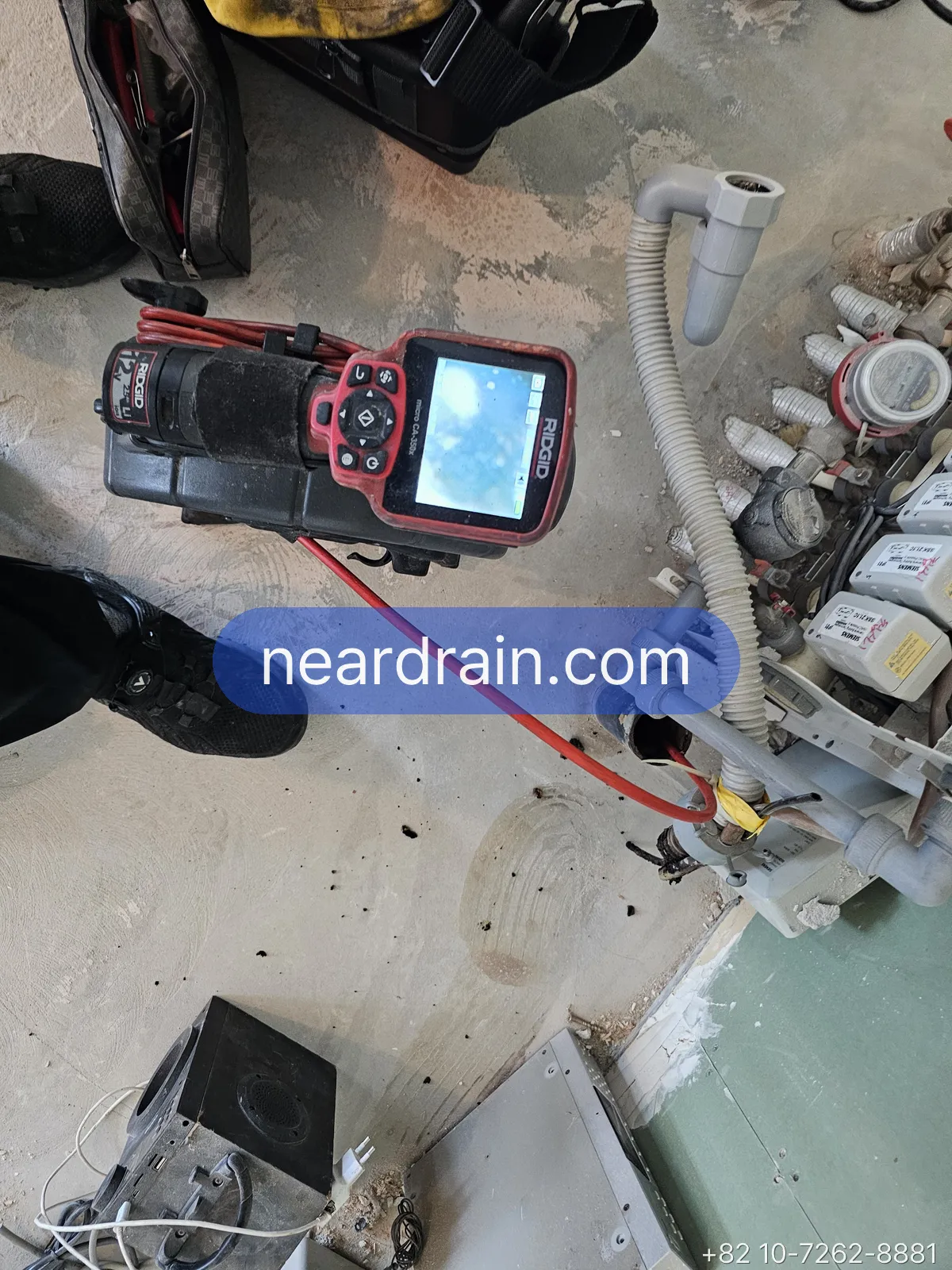
No stock photos on this site — every image below was taken by our crew on a real call.