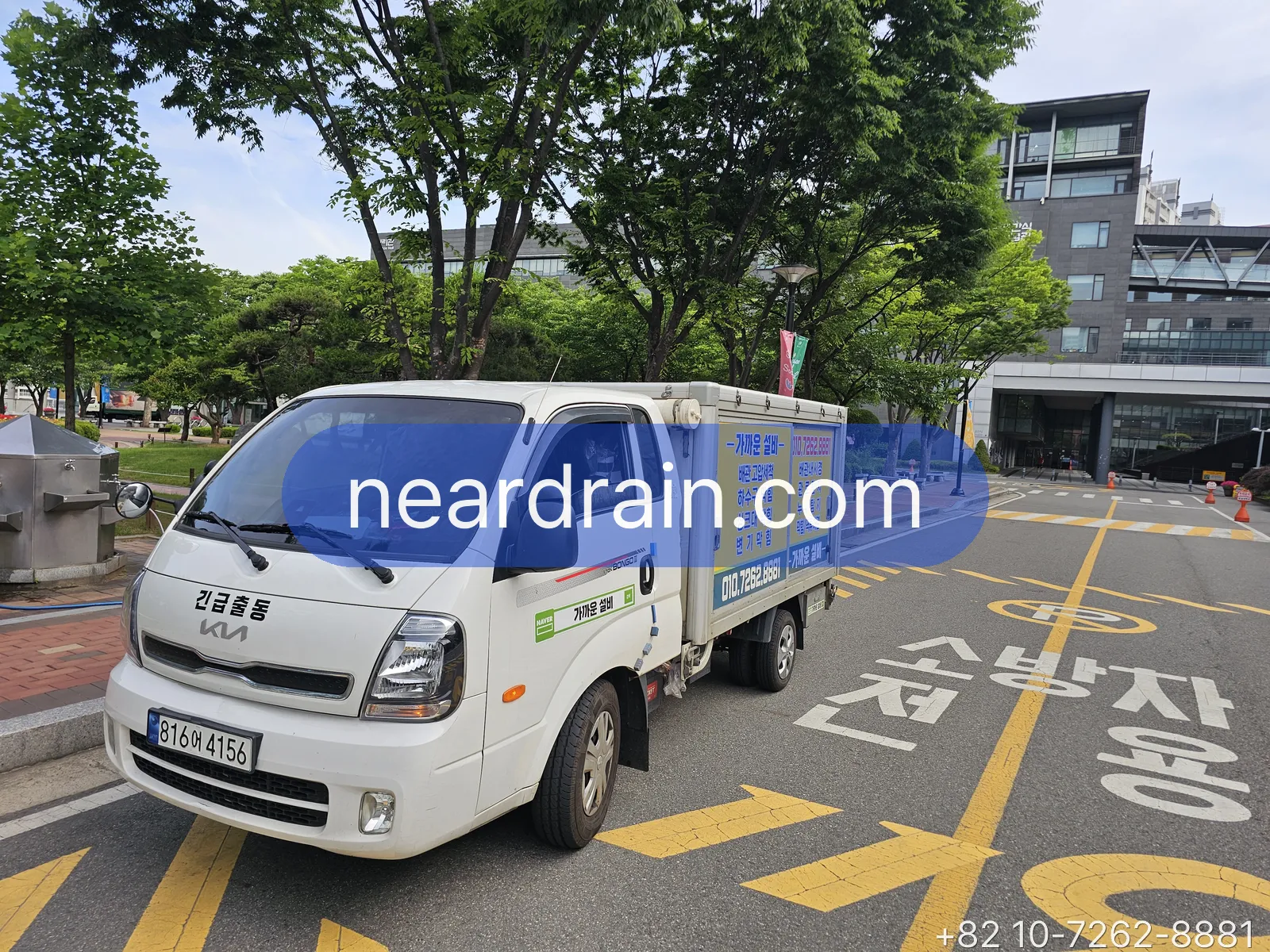
Korea has thousands of skilled plumbers and almost none of them advertise in English. The trade runs on phone calls, Naver searches, and stickers on your building's wall — all in Korean. The good news: you do not need conversational Korean to get a repair done well. You need a clear message, good photos, and three or four questions asked at the right moment. This guide gives you all of them.
Step 1: Decide who to contact
- Apartment or officetel? Start with the management office (관리실). For anything involving shared pipes they will handle it, and for in-unit problems they can often recommend a contractor the building already trusts. See our FAQ on when the office is the right first call.
- Villa, house, or no management office? You are hiring directly. Naver Maps (not Google Maps) is where local plumbers actually appear — search 하수구 (drain), 변기막힘 (clogged toilet), or 설비 (plumbing) plus your neighborhood name.
- Renting? Message your landlord before booking anyone — it affects who pays.
Step 2: Send a text, not a call
A phone call in broken Korean frustrates both sides. A text message with photos gives the plumber everything they need and gives you a written record. Copy the template below, fill in the brackets, and send it — the Korean version carries the message, the English keeps you oriented.
Korean (send this)
안녕하세요. [변기 / 싱크대 / 하수구 / 누수] 문제가 있어서 연락드립니다.
주소: [○○구 ○○동, 건물 이름] [○동 ○호]
증상: [물이 안 내려가요 / 물이 새요 / 역류해요]
방문 가능한 시간과 대략적인 비용을 알려주시겠어요?
사진 보내드리겠습니다.
What it says in English
Hello. I am contacting you about a [toilet / kitchen sink / drain / water leak] problem.
Address: [district, neighborhood, building name] [building no., unit no.]
Symptom: [it will not drain / it is leaking / it is backing up]
Could you tell me when you can visit and roughly what it will cost?
I will send photos.
Step 3: Photograph the problem properly
Three shots tell a plumber more than ten sentences:
- Wide shot — the whole bathroom or kitchen, so we see the layout and fixture type.
- Close-up — the drain, the toilet bowl water level, the wet patch, the corroded joint.
- A short video of the symptom — run the tap or flush and film what happens. Slow drains, gurgles and backups are diagnosed half by sound.
For leaks, add a photo of your water meter, and for pump or boiler issues, the nameplate with the model number. An experienced technician can often price the job from these alone.
Step 4: Give your address the Korean way
Korean addresses run big-to-small, and the last two pieces are what actually get a technician to your door: the building number (동) and unit number (호). "Raemian Apartment 103-dong 1204-ho" locates you precisely; a street name alone does not. For villas without a name, the road address on your door plate (e.g. 〇〇로 12길 34) plus your floor works. Mention the entrance keypad code or tell them to buzz your unit — technicians lose real time stuck outside lobby doors.
Step 5: Know what normal prices look like
Simple clog work in Seoul — a toilet or a single drain, cleared with an auger from the fixture — is quoted as one fixed figure on site; what moves the number is machine work, roof-vent access, or main-line jetting. Precise numbers vary by company and situation, but the structure of a fair transaction never does:
- A rough range quoted from your photos, before anyone visits.
- A firm number given on site, after diagnosis, before work begins.
- The same number on the receipt afterward.
The classic overcharge pattern is the reverse: vague answers up front, then a large number announced only after the pipe is already open. The defense is simple — get the total agreed before tools come out, in writing if you can.
The four questions that protect you
Ask these by text, or show them on your screen when the technician arrives:
- 작업 전에 총 비용을 알려주세요. — Please tell me the total cost before starting work.
- 추가 비용이 생기면 먼저 말씀해 주세요. — If extra costs come up, please tell me first.
- 카드 결제 되나요? — Can I pay by card? (A card terminal means a registered, taxable business.)
- 현금영수증이나 영수증 주실 수 있나요? — Can you give me a cash receipt or a receipt?
None of these are rude. Korean customers ask the same things, and a legitimate technician answers them without blinking. Hesitation on the card or receipt question is your cue to thank them and try someone else.
Etiquette, briefly
Two cultural notes that smooth every visit. First, there is no tipping in Korea — offering one creates awkwardness, not goodwill; a cold drink in summer is the gesture that lands. Second, help with logistics: Korean technicians usually drive a small truck full of machines, so a sentence about where to park (or a heads-up that they will need to register the vehicle with your building's security desk) saves fifteen minutes of circling. If your building needs a visitor code for the elevator, have it ready. None of this is required — all of it is appreciated, and appreciated customers get remembered the next time they call.
You may also run into Soomgo (숨고) and similar quote-matching apps. They work, but they are Korean-language interfaces on top of the same local contractors, and the quotes that come back still need the questions below. For a foreigner, texting one plumber well usually beats managing five app bids badly.
Red flags worth walking away from
- Refuses to give any range before arriving, then pressures you once on site.
- The price grows mid-job without your agreement.
- Cash only, no receipt, no business name anywhere.
- Wants to replace a fixture immediately without showing you why — ask for a look at the camera footage first (see drain camera inspection).
Or skip all of this
The whole reason NearDrain exists: English by text (SMS) works best. Phone calls are fine in Korean or Japanese. Send the photos from Step 3 to us, get the range, get a fixed number on site before work starts — the same routine this guide just taught you, minus the translation work. We cover Seoul from our base in Sadang-dong, Dongjak-gu, Seoul, these areas in particular.
From our own job sites
No stock photos on this site — every image below was taken by our crew on a real call.